Showing posts with label gluten free. Show all posts

Monday, July 9, 2012

Superfood Soup - aka Naturopath Bingo Soup!


*vegan friendly *gluten free *dairy free *contains sesame seeds – avoid if allergic!

Why Naturopath Bingo?

Us naturopaths give great advice to patients on superfoods which are fantastic for health. And we all know the best foods so give prescriptions for the same foods. Thats why you could play naturopathic bingo with this soup. Its full of the amazing superfoods that naturopaths rave about which are full of nutrients and are so good for your health!
Superfood stars of this soup...
  •   Kale – Kale is the number one choice for naturopaths when eating dark leafy greens. Dark leafys are one of the most concentrated sources of nutrients in foods, with them being rich in minerals (including calcium, iron, magnesium and potassium) and vitamins (C, E, K and Bs). They also contain phytonutrients which provide antioxidant properties and are excellent for protecting cells against eye damage and age-related problems. The darker the green, the more nutrients and kale is the darkest green of them all! I had a huge amount of kale delivered to me this week and so I found this soup online so I could utilise it before it went off.
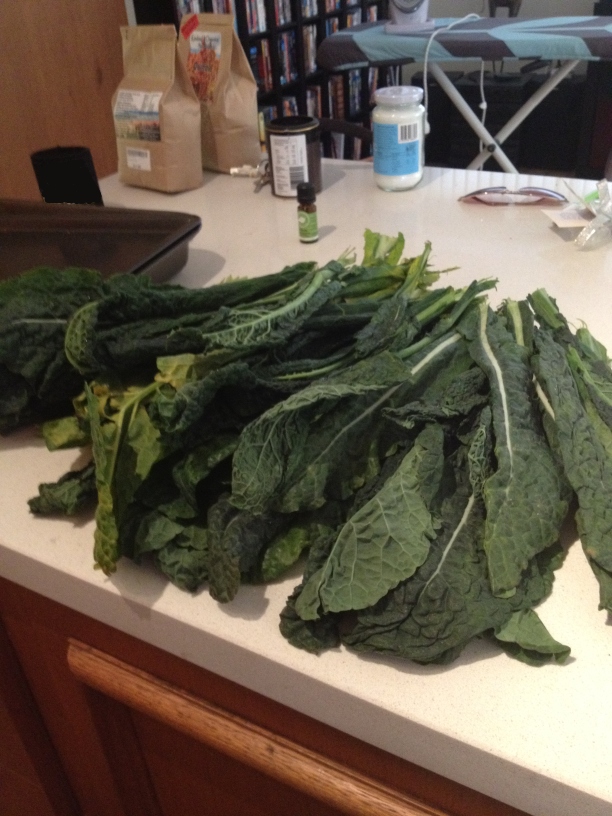
Kale explosion!!
  • Quinoa – Known as the mothergrain, quinoa is a complete protein, contains many nutrients and is also high in fibre. I’ve talked about why you should jump on the quinoa bandwagon in another blog, which you can find by clicking here!
  • Tahini – Tahini is sesame seed paste and is a fantastic vegan alternative to butter. It is also a great source of protein, as well as omega-3 and 6 fats, calcium, fibre, iron, magnesium, B vitamins and vitamin A. Tahini tastes similar to peanut butter, but is less likely to be oxidised – sesame seed oil is very stable in room temperature.
  • Garlic – Garlic is an pungent food which contains many medicinal properties. Raw garlic contains a constituent known as allicin, which is antimicrobial and fantastic to eat when you have a cold. This constituent is not heat stable and will lose its antimicrobial properties when cooked. Add it to the end of your cooking process to receive its full antimicrobial benefits. Garlic is also fantastic for cardiovascular health, lowers cholesterol and blood pressure, helps with liver detoxification and is anti-inflammatory.
I improvised a little as I had a bit more kale and wanted to add a bit more superfood love. Below is the original recipe and the parts in red are the parts I added.
Ingredients:
  • 1 small bunch kale *I used a BIG bunch of kale!
  • 4 tablespoons olive oil * I used coconut oil instead, as it was for heating.
  • 1/2 medium onion, finely chopped *2 brown onions
  • 1/2 cup quinoa *1 cup of quinoa, washed thoroughly first
  • 1/2 cup green lentils * 400g lentils, washed
  • 1 heaping teaspoon cumin 
  • 1/2 teaspoon curry powder
  • 5 cups water *2 litres of vegetable stock
  • 1 vegetable bouillon cube * didn’t use this, as I used liquid stock
  • 3 tablespoons tahini, plus more for garnish *4 tablespoons tahini
  • 2-3 tablespoons tamari (or soy sauce) *4 tablespoons tamari (wheat-free soy sauce)
  • * 4 cloves of smashed garlic

 Method:
  1. Wash and de-stem kale (use kitchen shears to cut along the sides of the stems.) Tear the leaves into smallish pieces.
  2. Heat oil in a large pot over medium heat, add onion and sauté for 3-4 minutes. 
  3. Add quinoa and lentils with 2 cups of stock and cook for 2-3 minutes; add cumin, curry powder, tahini, garlic, tamari and kale. Mix well. Add rest of the stock and bring to a boil. Cover and turn down heat to low. Simmer for 35-40 minutes.
  4. Simmer simmer!
  5. Carefully blend the hot soup in a food processor or blender and return to pot. You can skip this step or blend only half of the soup if you want some texture, but I think it’s nicest smooth. Add more tahini and tamari to taste.
  6. To garnish, mix 1-2 tablespoons of tahini with a small amount of water until it becomes smooth and bright. Drizzle on top of the soup and serve.

Soup is served!
The verdict...
This soup is delicious and gets better when left for a while. It tastes a little bit salty and I didn’t add any extra tamari at the end, but the aftertaste is amazing and it leaves you feeling satisfied, not full and very healthy!

Original recipe from: http://www.cookthink.com/recipe/11548/Kale_Soup

Monday, May 21, 2012

All you wanted to know about food labels (and were afraid to ask)


Organic. Biodynamic. Genetically Modified. Gluten free. Lactose free.

You may have seen these, or heard people talk about these and just smiled and nodded. But do you know what these terms are? Well, its time to put your fears to rest and learn exactly what these food labels mean!

Organic

Organic food is becoming more and more popular these days, with many supermarkets having an organic fruit & vegetable section and a number of organic items on the shelves.
Organic food is farmed without using chemicals in their processing. This means there is no use of synthetic pesticides, growth hormones, antibiotics, genetically modified seeds & animal breeds or irradiation. Instead of pesticides, farmers use more natural alternatives such as crop rotation and plant-based sprays.

The perks? This is how food is meant to be. The smell of the food is stronger, as is the taste. There are also more nutrients in organic food. And it is 100% what you see is what you get!
The bad? There is a shorter shelf life for organic food (as food is not meant to last for a month unspoiled!) and it can also be more pricey.

Companies and farms which produce organic food must be certified in order to label it ‘organic’. When buying organic, look for one of these certified stickers on the label. If its missing a certification, your food may not be truly organic.


Biodynamic


Biodynamic farmers use organic principles when farming, but also look at the life cycle of plants to calculate the best time to farm them. Its not as crazy as it sounds. You may have been in your garden and found that in the evening the smells of some plants are a lot more fragrant than they are during the day. I know my rosemary plant smells amazing at night time! This means that the plants natural constituents are more active at night, so if I want to get the most goodness out of it, I would pick at night.
Biodynamic produce is quite often used in dairy products, where the grass fed to the cows are cut at the right time to get the most nutrients out of it for the cows to ingest.
Biodynamic has the same perks and cons as organic.


Genetically Modified Foods (GMO)

This is a relatively new way of farming which is filled with controversy. GMO produce mainly consists of soy, corn and wheat in Australia. The seeds of these plants have been modified genetically (hence, the name!) to make the plants more drought resistant, cold resistant, pest resistant or last longer.
The major issue with GMO produce is that they have no idea what the long term effects are when people eat them. The companies producing these GMO seeds say that they are 100% safe, but there are studies which looked at the effects of GMO food in rats with not so positive results. The problem is, as these foods are still relatively young in the produce world, we have no idea what the long term effects will be until 50 years from now. As these seeds are more durable and last longer, they are also cheaper to produce so many companies use them in their foods.
Food which contains genetically modified ingredients needs to be labelled by law, so we are given the choice if we want to eat it. I found this guide last year and found it very useful for parents looking for non-GM choices for their children: http://www.truefood.org.au/documents/TrueFoodGuide_Kids_2011.pdf Download it, print it out, and be an informed shopper for your kids sake.


Gluten free

This isn’t a farming method, but thought it would be worth discussing anyway, as some people may have no idea what gluten is.

Gluten is a product found in many different wholegrains and gives them their binding and elastic properties. Some people have an intolerance to gluten, with a condition known as Coeliac disease. When they eat gluten products, the lining of their small intestines gets damaged and results in difficulties absorbing nutrients into the bloodstream. Some people with Coeliac experience mild symptoms, such as bloating, flatulence and changes in bowel habits, while others can get extremely unwell.


Common grains which contain gluten:
  • Wheat
  • Semolina
  • Barley
  • Spelt
  • Oats
  • Rye
  • Triticale (a hybrid of rye and wheat)
If you suspect that you may have an intolerance to gluten products, try avoiding the above grains and see if you experience any differences in your health. Coeliac disease can be diagnosed from your GP.


What grains and cereals are safe and gluten free?
  • Rice (preferably brown), rice flakes, rolled rice
  • Corn, maize, polenta
  • Tapioca, sago
  • Buckwheat
  • Quinoa
  • Amaranth
  • Millet
  • Arrowroot
  • Potato starch or flour
  • Non-wheat pastas – rice, corn, soy
  • Noodles – rice, mung bean, soba (Japanese buckwheat – check the label, many still contain wheat!)
  • Potatoes
  • Legumes (cannelloni beans, lentils, haricot beans, kidney beans, chick peas, navy beans, etc.)


Lactose free

Lactose is a sugar found in dairy products and some people have difficulty digesting lactose and breaking it down in their body. People may experience bloating, flatulence or even nausea after having milk. When you think about it though, are we really meant to be drinking the milk made for another animal?
Some people find relief by having A2 milk, as this contains a slightly different protein to ordinary milk. This means the person does not have lactose intolerance, but just an intolerance to a beta-casein strain found in milk.
Those with a lactose intolerance should avoid milk and dairy products altogether, unless they are labelled ‘lactose free’. Alternative lactose-free milks include soy milk, almond milk and rice milk.


Now you can hold your head up high and be informed at the supermarket and in conversations! I hope this blog was beneficial for you! –Laura x