Showing posts with label food facts. Show all posts

Tuesday, March 26, 2013

Easter and Chocolate - Your guide to doing it right!


Happy Easter to those who celebrate it and Happy March/April holidays to those who don't!

Whether you celebrate or don't, you must have noticed the large amount of chocolate eggs and cardboard bunnies filling supermarkets recently. Yes, Easter is to confectioners as Mothers Day is to Florists - a chance to make oodles of money and to get as many children eating chocolate as possible. Maybe in the future this holiday will be known as Diabetes awareness holiday?

I am not going to sit here typing and condemning people on buying chocolate for kids, but I will give a few pointers on what to look for when buying chocolate so at least you don't give them a helping of chemical shitstorm along with it.


First, a quick history lesson!

As a trivia nut, I love researching these things. I wanted to know how chocolate came to be apart of Easter. There are a few different European traditions which provide answers on why an egg was used:


  • Eggs are a symbol of fertility and Easter was originally a celebrated at the time of the Spring equinox with a feast for the Earths resurrection and birth. Extra trivia here - The Assyrian goddess Eostre was the goddess of birth - this is where the name Easter comes from! ;)
  • In Christian customs, eggs were stained red in the memory of the blood of Christ shed at his crucifixion.
  • In traditional Lent, eggs were forbidden as they were seen as a dairy food and the day we know as Pancake Tuesday was used to mark the last day where eggs could be consumed before Lent begins.
  • In Jewish tradition, there is a custom of having a roasted egg as part of their Passover meal (Seder).
  • Easter eggs in Europe are covered in a wax and then brightly painted to symbolise new life.
A German tradition of hanging eggs from trees - a picture from my beautiful friend in Germany xoxo
I'm sure you are all learning something from this, but what does this have to do with chocolate? Chocolate Easter eggs were first sold in the 19th century by French and German confectioners. Chocolate is much nicer to eat, so it was a brilliant idea!


What to look out for this Easter...


1. Say no to palm oil!

You may or may not be familiar with what palm oil is doing to our planet? Palm oil is extremely popular to use by manufacturers and can be found in baking goods, confectionery, cosmetics, body products and cleaning agents. Unfortunately most palm oil produced is not from sustainable methods and vast areas of rainforest are being slashed and burned to make way for palm oil plantations. Many orangutans (who are dwindling in numbers) and other wildlife are being killed in the process.

Many countries have laws about mandatory labelling of palm oil, but companies hide it under other names, such as vegetable oil - how many times have you seen that on a packet? Visit http://www.saynotopalmoil.com/palm-oil.php for the top 30 list, its incredible.

So what chocolate is palm oil free this Easter?


2. Avoid the chemical shitstorm

I took this photo when I was buying chocolate for my 6 nieces and 1 nephew:
Needless to say that this product did not get purchased. What is half this stuff? the flavour vanillin is actually pulped treated wood chips which happens to smell like vanilla and is a very common cheaper flavour added to foods - watch out for it. Vegetable oil also lurks in this ingredient list, as does colours which are recommended to be avoided by the Hyperactive Children's Support Group, as it may cause allergic reactions.

What to look for when buying Easter eggs...

  • As less amount of ingredients as humanly possible - its chocolate, not a chemistry experiment.
  • Avoid anything that has palm oil or vegetable oil in it (look at the list above for good companies)
  • Opt for dark chocolate if your child will not wrinkle their nose at it - dark chocolate has been less processed than milk chocolate  - see my facts on cocoa blog for more info.
  • Go for organic chocolate if you can find it - at least you know the cocoa they use is only cocoa and not cocoa + sprays to keep insects off!
  • Don't over indulge - Australia is large enough already, lets not keep adding to our obesity epidemic by buying little Johnny 100 eggs and then wonder how he developed diabetes when he is aged 8. Lets be sensible!

Thursday, July 26, 2012

App review: Sustainable Seafood Guide


Its been a while since I’ve done an app review and I think this is a great one to look at!

There has been a lot of talk recently about sustainable food – for those who aren’t really sure what this means, sustainable produce is a way of raising food that is healthy for consumers and animals and does not harm the environment, is humane for workers, respects animals, provides fair wages to the farm and supports & enhances rural communities. It is the encouragement of awareness if where our food comes from. Humans have an annoying ability that when they get the idea that something is good for you, it gets mass farmed and sometimes goes to the point of extinction.

Our oceans are suffering from the over-farming of fish, as well as a high amount of pollutants being dumped in the oceans. Most salmon native to Australia is not from the ocean, but from a farm, where salmon are crammed into pens and fed pellets made from soy, hydrolysed chicken feathers and even other fish. High amounts of carcinogens have been found in these farmed fish. That doesn’t sound like the fish John
West are grabbing from bears!

I was devastated to find out that this doesn't really happen.


So how do we know what fish are ok to eat, and which ones should we avoid?


The Sustainable Seafood app made by the Australian Marine Conservation Society can point you in the right direction! This app is very easy to understand and to use. You can search by sustainability, or by a certain fish. A handy one to look at when at the fish market, or even at a fish and chip shop!


This app also links to the Greenpeace canned tuna guide, which ranks different brands based upon their sustainability, catching methods, if there will be any by-catch (other sealife caught in the same catching method) and where it is caught. You may be a bit surprised where your supermarket favourites end up on the list!

This is a must have app for any seafood lover in Australia, and its free.

Be informed and be a smart shopper!

Tuesday, June 26, 2012

Coconut Oil


I thought this would be a good time to bring up cooking oils. It is usually recommended by TV to use olive oil over other oils (vegetable oil, sunflower oil) as it has been shown to reduce cholesterol levels and the risk of cardiovascular disease (CVD). While it is fantastic to put on salads and on foods after cooking, olive oil is not a heat stable oil and loses its health benefits when heated and can convert to trans fats - a harmful by-product which can increase the risk of CVD, obesity, diabetes, cancer and even Alzheimer's. 

Saturated fats are heat stable (solid at room temperature) and are less likely to convert to trans fats. A safe and healthy alternative to use is coconut oil.

What is coconut oil?
Coconut oil is a highly aromatic saturated fat which can be used for cooking. It is mainly used in parts of Asia (such as Malaysia and Vietnam) and India and adds a slight coconut taste to cooking. 

What are the health benefits of coconut oil?
Cholesterol lowering
Coconut oil contains lauric acid, which contains the ability to assist in cholesterol management. There have been mixed results in coconut oils  activity with cholesterol levels: some studies indicate that it lowers LDL cholesterol and oxidation in the body, while others indicate that the negative effects of saturated fats suggest that it should not be consumed regularly. Coconut oil has been found to decrease cholesterol in studies performed in its countries of origin, leading to theories that it may be due to the storage methods or lowered deterioration of the oil.

Anti fungal properties
Coconut has been found to have antimicrobial properties, with studies showing that it has the ability to kill fungal infections including Candida albicans (Thrush). It also has been shown to have moderate anti-inflammatory and pain relief properties in animal studies.

Weight loss / thyroid assistance
Some websites claim that coconut oil may have properties which assist weight management due to an effect up on the thyroid. This property cannot be substantiated, as there has been no research found to backup this claim.

Antioxidant
Coconut oil has been found to lower oxidation effects in the body, making it a good antioxidant. It has been found that extra virgin coconut oil contains more antioxidants, so buy extra virgin (unless you really don't like a coconutty flavour)

What do I look for if I’m going to buy it?
Coconut oil can be found in all good health food stores. Extra virgin Coconut oil is extracted via a wet process, and coconut oil is extracted via a dry process. Buy either virgin or extra virgin - Extra virgin will give you a slight coconut taste, while virgin has no coconut taste.  

Organic coconut oils will not contain genetically-modified coconut or have previous pesticide use, so the healthier option would be to buy an organic brand.

Storage:  Keep your coconut oil jar in a cool place, as it can melt with heat (tip: keep it in the fridge in summertime!).

How to use: Use it just the same as you would butter in a fry pan. Coconut oil will melt pretty quickly and if using extra virgin coconut oil, your kitchen will smell amazing, especially if you cook it up with onions! 

Thursday, June 21, 2012

10 Reasons why you should jump on the quinoa bandwagon!

Quinoa (pronounced keen-wah) has recently become popular in the Western world and has even made it onto the media circuit, it being used in meals on The Biggest Loser, My Kitchen Rules and Masterchef, just to name a few. So is this just a fad new food, or is it something to be taken seriously? If you haven’t tried it, its definitely time to jump on the quinoa bandwagon and I’ll give you 10 reasons why!
  1.  Quinoa is an ancient grain native to South America and mainly found in Bolivia, Peru, Columbia and Ecuador. For these cultures, this is a staple grain. The ancient Incans called it ‘the mother of all grains’ , valued it the same as gold and held it to be sacred.
  2. Quinoa is a gluten free grain, so is a coeliac-friendly alternative!
  3. Quinoa is one of the few plant-based complete proteins. This means that it contains all of the essential amino acids necessary for the dietary needs of humans. If you are vegetarian, you may be at risk of not eating enough of all these amino acids each day, so quinoa is a great option! Not only is quinoa a complete protein, its also a good source of protein, with roughly 14g of protein per 100g of uncooked quinoa!
  4. Quinoa is a good source of both soluble and insoluble fibre – Eating soluble fibre has been shown to reduce the risk of developing heart disease by reducing cholesterol levels.  Eating insoluble fibre has been shown to reduce the risk of developing constipation, colitis, colon cancer and haemorrhoids.  Diabetics on high-fibre diets need much less insulin.
  5. Quinoa is high in magnesium, phosphorus and potassium. Those on potassium-sparing diuretic medications should note that 1 cup of cooked quinoa is equivalent amounts of potassium to 1 banana. Quinoa also contains smaller levels of iron, zinc and calcium.
  6. Quinoa is easy to digest, which means those who have trouble absorbing nutrients from foods (such as the elderly, people on some medications, or with gut issues) will find this a nourishing and easy way to get your nutrients.
  7. Quinoa is very easy and quick to cook! Before cooking, wash your quinoa under water thoroughly to remove the outer coat of saponins which make it more difficult to digest. Some people like to soak their quinoa for 5 minutes before use to be sure all saponins are gone. The cooking method is similar to rice, bringing 2 cups of water to 1 cup of grain and cover on a low simmer for 10-15 minutes, or until the germ seperates from the seed. The cooked germ looks like a tiny curl and should have a slight bite to it. You can also cook it in a rice cooker on the same water : quinoa ratio.
  8. Uncooked vs. Cooked Quinoa: 1/3 cup makes this much cooked (this is an average dinner plate)
  9. 2013 has been declared the UN International Year of Quinoa. A grain that has had a year declared for it can’t be all that bad!
  10. It tastes yummy! The taste and texture of quinoa is a bit like brown rice crossed with oats. It’s fluffy, creamy, crunchy and somewhat nutty, all rolled into one.
  11. Quinoa is a very versatile grain, with it being used in both sweet and savoury dishes. A few ideas on how to have it...
·         Make a quinoa salad - you could try my quinoa tabouli, or simply grate up some vegies and toss your quinoa in with it. Very easy.
·         An alternative to using wheat pasta – very tasty with a pasta sauce (like my ridiculously easy sauce!)
·         Add to soups to add texture and make a hearty meal
·         Instead of fried rice, make fried quinoa!
·         Quinoa patties
·         Quinoa porridge
·         Add quinoa flakes to smoothes
·         Puffed quinoa with muesli and yoghurt (similar taste to rice bubbles!)
·         Just by itself!

So there you have it, ready to jump on the bandwagon now?  You can buy quinoa from some supermarkets (its usually in the health food aisle), at markets and health food stores.

Think before you buy...

Something which has recently come to light about quinoa is unfortunately as the demand of it increases in the Western world, the price has also increased for the native people in Bolivia. This means what was once a staple keeping people healthy is now unavailable and they are forced to eat more nutritionally-devoid foods, like white rice and noodles.
Check the back of the pack of your quinoa to see where it comes from.  If you are in Australia, Kindred Organics from Tasmania is available in many stores so purchase local products to help local farmers and reduce the requirements from Bolivia.

Quinoa comes in white, red and black grain. There is no large difference between them all nutritionally, some people say that the red grain is slightly harder to break down that the white. Some places make a mix of the 3 to make a multicoloured dish.

So now you know about this amazing food! Be inspired to add it to your breakfasts, lunches and dinners!

Uncooked vs. Cooked Quinoa - know the difference!


Friday, June 15, 2012

Pass the salt please!


We are told all the time that too much salt is bad for us. Thats true. But not all salts are the same! I’ve blogged to you about pepper, so its time to blog about the other common seasoning in our lives... salt!

What is salt?

Salt is comprised of the chemicals sodium and chloride (NaCl). It is one of the oldest and most common food seasonings around. The taste of salt is one of the basic human tastes and we need it (in small quantities) to survive. It is historically used as a form of preserving foods, as retains water, thereby stopping moisture and preventing foods from moulding. Salt preserving foods is still used today. In its natural state, salt contains trace minerals of magnesium, calcium, potassium and sodium.

For the people who love random facts out there, salt has been utilised in religions all around the world, with 35 verses about it in the Hebrew bible, 6 verses of the Christian bible, is very auspicious (good omen) in Hindu rituals, Wiccans used salt to clear negative energies and the Aztecs worshipped Huixtocihuatl, the fertility goddess who presided over salt & salt water.

Whats so bad about it?

Unfortunately most processed foods today contain salt, as it is used to enhance flavours. Once our bodies adapt to a level of salt, we keep needing to add more to get flavour out of foods. In our bodies, sodium is processed through the kidneys. When a person eats large amounts of it, the kidneys cannot process it all and excess sodium ends up in the bloodstream. Because it retains water, the volume of blood in the body increases, putting an added strain on the heart to pump the blood. Long term high salt intake has been linked with health conditions such as high blood pressure (hypertension),  heart disease, oedema (fluid retention) and kidney failure.

Foods known to be overly high in salt...
  • Canned foods (soups, vegetables, fish)
  • Cured meats (salami, bacon, corned beef)
  • Snack foods (potato chips, pretzels)
  • Processed foods
  • Foods "low in sugar" - some of them make up for it in salt!
  • Butter

The important thing is too look at the nutritional breakdown on the back of packaged foods. Anything below 150mg of sodium per 100g is considered low in sodium. Fresh produce (fruit, vegetables, meats, eggs, unsalted nuts, seeds) are naturally lower in sodium than processed foods.
Try to keep your daily sodium intake below 2000mg. If you only add salt when cooking and not afterwards, you may find your taste for salt changes and you don’t need to eat as much to get the flavour hit.

Unfortunately the salt added to foods is usually from table salt. See below for more details why this is a concern.

So are all salts the same?

There are variety of different salts around that you can buy, I've discussed the more common ones...

Table salt

This is the ground up stuff you can buy in shakers from the supermarkets, or in granulated packets. Table salt usually contains 97.5% sodium chloride and 2.5% other chemicals, such as an anti-caking agents, but some people put uncooked rice in with their salt as this does the same thing. Common additives include iodine, fluoride, iron and anti-caking agents. In processing, table salt is chemically “cleaned” (aka bleached), and then heated up to 650 degrees Celsius, which changes the natural chemical structure of the salt, removes all the beneficial minerals and makes it a potential cause to many health conditions.

Sea salt

Sea salt is collected from the ocean (thats why the shell is in this picture! :D). It is collected in trays, which are then dried in the sun. This means there is minimal processing and leaves the trace minerals in tact. However, many companies package their processed salt and call it “Sea Salt” as all salt came from the ocean at some point. Check the colour: if its pure white, its not alright! If its non-white, it means it contains minerals. Celtic Sea salt has a greyish sandy colour. Himalayan salt is a sandy rose colour. Read below for more details.

Black salt


I had to mention this one. I haven’t seen it anywhere to buy except at an amazing cafe near my house, called, strangely enough, Black Salt Cafe. Their salt is black! What makes it black? It is an unrefined sea salt from the Mediterranean which was originally white, which was then ground with volcanic charcoal and activated carbon. Charcoal is a natural detoxifier of the body, making it a healthy salt. Amazing stuff!


Movie Salt


Salt is a 2010 movie starring Angelina Jolie and Liev Schreiber The plot is about a CIA agent who goes on the run after a defector accuses her of being a Russian spy. Although its not the best film ever, its a good action flick which keeps you thinking. (Sorry, had to mention this one!)

Celtic sea salt

Also known as Sel gris, or Gray Salt. This is sea salt which uses solar evaporation methods, but is allowed to come into the contact with the bottom of the salt pan before being raked  (with wooden rakes), making it a greyish colour. It is a moist salt, meaning it does not suck all the moisture out of food when being used. This makes it ideal for heartier foods, like steak and root vegetables. It is also mineral rich, containing over 80 minerals and is herbicide and pesticide free.

Himalayan Crystal salt

This is the Grand Poo Bah of all salts. This is the most pure salt you can get. It contains the full spectrum of 84 minerals and trace elements that mother earth intended. It is an unprocessed, raw salt which is hand-mined from salt caves around the world formed 250 million years ago. Salt lamps can be bought made out of this salt and helps naturally ionise the air and adds an attractive glow to a room. Why is it called Himalayan? It used to be found just in the Himalayas, which would have to be considered one of the untouched natural paradises of Earth. Now it is farmed in many places around the world (mainly Pakistan), but the name still stuck.
Himalayan Salt Lamps - Hows the serenity?
So Celtic or Himalayan? Both seem pretty pure to me!
Himalayan salt is said to have numerous health benefits, including healthy pH balance for your body, blood sugar balances, promoting vascular health, supports respiratory health, helps with weight loss, promotes natural sleep cycles, supports your libido reduces the signs of aging, reduces muscle cramps and reduces sinus problems. This being said, this doesn’t mean you should go out and eat a kilo of Himalayan salt every day. Celtic sea salt has similar health benefits.

I believe Himalayan salt is more pure, as it is unclear how pure the waters are that Celtic sea salt is formed from. But ultimately, the choice is yours. Try both and see what you think!

Next time you ask someone to pass the salt, ask them to pass the Himalayan salt!


Sunday, June 3, 2012

Caffeine Facts!


How many of us start our day with a cup of coffee or tea, or we hear that person in the office say “I just don’t function until I have my morning coffee”? Time to learn more about that required caffeine hit!

a little bit about caffeine...

Caffeine is a naturally occurring chemical substance which affects our central nervous system by temporarily warding off drowsiness and makes us alert. I think this comic by The Oatmeal Comics sums up what caffeine does in our bodies really well:


Caffeine is naturally found in coffee, black tea, green tea, chocolate, yerba mate, guarana berries and foods derived from the kola nut (such as cola). It is added to energy drinks to help give the buzz. The effect usually occurs within an hour of consumption and a moderate dose wears off in about 5 hours.

Benefits of Caffeine

Caffeine is not only a stimulant, it also has other effects in the body. Do you find that soon after your caffeine hit you need to go to the toilet? Its not a coincidence. Caffeine is a natual diuretic, meaning your urinary output is increased. Caffeine also is a mild laxative, so can be beneficial to those with constipation. Caffeine is also a bronchodilator – it dilates the bronchi and bronchioles, thereby increasing the airflow to the lungs. If someone is suffering from asthma, or difficulty breathing. Be a MacGuyver and give them a cup of strong coffee! (Note, ask them if they have any caffeine sensitivities first!)

Health risks of Caffeine

Caffeine can disrupt natural sleep patterns, especially if its consumed in the evening. While not all people are affected by this, in some in can cause insomnia. Caffeine affects liver detoxification by speeding up your 1st liver conveyor belt (don’t know what I’m talking about? Read this blog entry.). This can have detrimental toxic effects.

Once people get used to having coffee regularly, they can develop a dependency for it, which can lead to symptoms including headaches, irritability, nervousness, restlessness, heart palpitations after use. When your body consumes high levels, you may get anxiety and coffee jitters from over excitation of your nerves.
If you want to withdrawal from caffeine, you may experience headaches, irritability, nervousness, joint stiffness, anxiousness which begin to show in the 1st 12 to 24 hours, peaks at 48 hours, then continues for 2-9 days.

Like anything in life, moderation is the key. A coffee or green tea now and then should cause no major disruptions to your health (unless you fit into the categories below), but if you live off the energy drinks, then be prepared to be at risk. I went to uni with a guy who used to drink Red Eye energy drinks all the time and one day I saw him drinking Red Bull Essence. He was sweating in the middle of Winter. That was 10 years ago. I would love to know how he is today!


Avoid if...

Those with heart conditions, high blood pressure, insomnia, peptic ulcers or a sensitivity to caffeine should avoid caffeine products. Some religions, including Seventh Day Adventists, Christian Scientists and Gaudiya Vaishnavas refrain from caffeine.

How much caffeine is in things?

This table shows caffeine amounts in mg, based on the USDA Nutrient Database.

Product
Serving size
Caffeine per serving (mg)
Caffeine tablet (extra-strength)
1 tablet
200
Caffeine tablet (regular-strength)
1 tablet
100
Coca-Cola Classic
355 mL
34
Coffee, decaffeinated
207 mL
5–15
Coffee, espresso
44–60 mL
100
Coffee, instant
1 tsp
31
Drip coffee
207 mL
115–175
Guaraná Antarctica
350 mL
30
Guayakí yerba mate(loose leaf)
6 g
85
Hershey's Milk Chocolate(11% cacao content)
1 bar
10
Hershey's Special Dark(45% cacao content)
1 bar
31
Jolt Cola
695 mL
280
Mountain Dew
355 mL
54
Percolated coffee
207 mL 
80–135
Red Bull
250 mL
80
Tea – black, green, and other types, – steeped for 3 min
177 mL
22-74

Caffeine amounts vary for different foods, so these figures are not finite. Tea and coffee caffeine amounts can vary based upon growing conditions. If you are concerned, check the labels!

So how much is too much to consume each day? It varies from person to person, but most places I researched said the ballpark guideline is no more than 600mg daily to avoid major health risks.

Guidelines state that pregnant and breastfeeding women should have no more than 200mg daily, as higher doses are connected with low birth weights and even miscarriage. Anything you ingest also affects your baby – caffeine can affect your babies heart rate (if pregnant) and can be passed through breast milk (when lactating). There are great caffeine-free beverages available if you wish to avoid coffee and black tea altogether – see below for more details.

A fatal dose of caffeine is 170mg/kg, which is like consuming 80 to 100 cups of coffee at once. Perhaps you don’t need a caffeine hit THAT much!

Decaffeinated coffee?

Many times have I gone into a cafe and the person in front of me has asked for a skinny decaff, or I go into the supermarket and there are jars of decaffeinated coffee sitting on the shelf next to the instant. Coffee naturally contains caffeine, so how do they get the caffeine out of it??

After doing some research, I found there are several methods on decaffeination:

  • Swiss Water and French Water extraction: uses no chemical solvents. This involves soaking the beans in hot water, then spraying the beans with the water to reduce flavour-loss compromisation.
    • PROS: No harmful chemicals used in process.
    • CONS: Flavour of beans may be lost.
  • Solvent extraction: uses methylene chloride, ethyl acetate, ethyl alcohol, acetone and ethyl ether to extract the caffeine. This may done directly after the water extraction methods, or involves direct solvent extraction.
    • PROS: Full-flavour of beans is maintained.
    • CONS: Harmful chemicals are used in this process. Methylene chloride has been found not to be carcinogenic to humans, but can deplete the ozone layer.
  • Super critical carbon dioxide extraction: high-pressure carbon dioxide is transformed into a dense liquid, in which the beans are treated with to extract the caffeine.
    • PROS: This does not involve dangerous chemicals and there is no flavour lost in this process.
    • CONS: Found to be very capital intensive
  • Microbial decaffeination: Bacteria is sprayed onto coffee plants and is capable of degrading caffeine
    • PROS: No caffeine processes warranted, flavour of beans remains
    • CONS: Enzymes in bacteria to degrade caffeine are not stable
  • Genetic modification: some companies have derived methods capable of producing decaffeinated plants.
    • PROS: No caffeine processes warranted, flavour of beans remains
    • CONS: The plants use caffeine as a defence against predators (thus making the plant weaker) and decaffeinated plant seeds may prevent growth of neighbouring plants. Unknown long term effects of genetically modified foods.

Annoyingly, when looking at jars of instant coffee, the caffeine extraction method is not listed. So how do we know what we’re consuming? We don’t. Companies that mass produce their decaffeinated coffee are more likely to use a cheaper method which may involve chemical extraction.

Caffeine free alternatives!

Yes, you can still go to the local cafe and not have caffeine! What are the options?

  • Roasted dandelion root tea – tastes similar to coffee, but without the caffeine
  • Herbal teas – chamomile, lemongrass & ginger, cinnamon, peppermint, licorice – all are popular teas found at  most cafes which are a sweet alternative!
  • Rooibos tea is Afrikaan for “red bush” and is popular in South Africa. It is starting to get more fame here. Tastes similar to black tea and comes in many flavours.
  • Fresh juices – a natural energy hit with a freshly made juice. Apple, orange, carrot, celery, ginger, beetroot, pineapple, mint, lemon, watermelon... the choice is yours on what you put in.


Don't take from this blog that I am anti-caffeine. Far from it! Like most people, I enjoy the aroma, taste and buzz from a good coffee. But like I said earlier, moderation is the key. Knowledge is powerful and this blog is about education, not reprimand. Be aware of what you are putting in your body and take care of it.

Another perk of a caffeine hit - amazing coffee art!

Comic is copyright to The Oatmeal Comics.


Tuesday, May 1, 2012

Purple... carrots?


A fantastic find at the supermarket – purple carrots! No, its not something from Alice in Wonderland, all carrots used to be purple until the 17th century when Dutch growers took mutant strains of purple, yellow and white carrots and created the modern day orange carrot. No idea what made them wake up and decide to play with carrot colours, history is a bit fuzzy. 

So whats the difference? Orange carrots are rich in beta-carotene (vitamin A), vitamin C, B vitamins, calcium, magnesium, phosphorus, potassium and antioxidants including lutein, which is good for eye health. Carrots are excellent for healthy skin and hair, regulates intestinal activity, provides energy and is an excellent anti-inflammatory food.

Purple carrots have all these good features, plus anthocyanins – a potent antioxidant which gives vegetables their reddish/purple/bluey colour. But more importantly, they capture harmful free radicals in the body, slow blood clotting and act as an anti-inflammatory agent. Recent studies have shown that these benefits as well as other antimicrobial and anti-carcinogenic activities can help and prevent cancer, heart disease, stroke and diabetes.

And how do they taste? Just like orange carrots! You can eat them just the same as normal carrots too – raw, steam, grate, juice, stir-fry. Add a new colour to your meal and give purple carrots a go! –Laura x

Sunday, March 18, 2012

Want some cracked pepper on that?


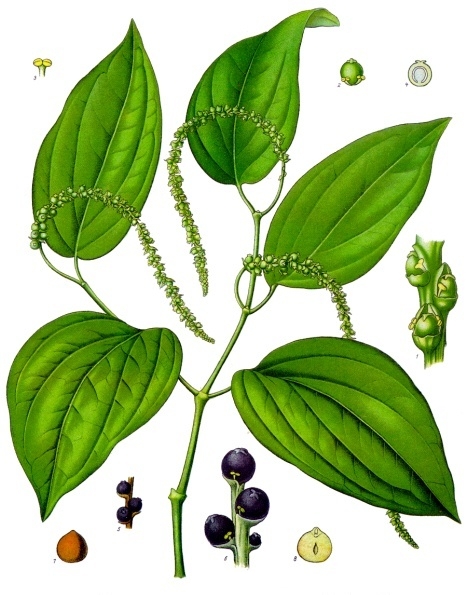
Black pepper – Piper nigrum. It lives on our kitchen table next to salt and adds a deliciously spicy (or you could say peppery!) flavour to our food. But how much you actually know about it? This week, I will be explaining a little bit more about this spice to you in regards to its benefits to our health.

A short history of pepper: Pepper is thought to be originated from India where is has been used in traditional Indian medicine (Ayurvedic medicine) for thousands of years. In India it is used as a home remedy as a powder or in a decoction (brewed with hot water) for relief from sore throats, throat congestion and coughs.
It was one of the most highly regarded trade goods within Asia, and it was known as ‘black gold’ and was often used in place of money. Only the rich people of ancient Greece could afford to use it, and black peppercorns were found stuffed in the nostrils of Rameses II. Be grateful that we can readily buy this spice! 

Pepper was one of the medicines which were allowed to be carried by Buddhist monks. Traditional Chinese medicine (TCM) uses pepper in patterns of cold, as it is energetically warming and stimulates a warming flow of energy to the body, particularly in the abdomen.  It is used as a diaphoretic (helps promote sweating) when people have colds and its hot pungent flavour benefits the lungs and protect against colds and flus.
It is also used to help treat patients with diarrhoea – crack 6-8 peppercorns into freshly boiled water and allow it to steep for 10 minutes. It really works! It can also be used for bowel pains in a congee (a simple rice soup which is easily digested and nourishing when you are debilitated).


'There's certainly too much pepper in that soup!' Alice said to herself, as well as she could for sneezing. — Alice in Wonderland (1865). Pepper has been associated with causing people to sneeze heavily, why is that? Pepper contains a constituent known as piperine, which is thought to be the main culprit for the sneezing, the spicy quality to pepper and its other amazing uses. Piperine has been found to have a protective effect upon liver cells and also increases the absorption of getting nutrients into the body.
Black pepper also contains some important vitamins and minerals, including vanadium, chromium, magnesium, calcium, zinc, iron and vitamin K. So make sure you put some cracked pepper on your vegies to get the most out of their goodness!


There are different coloured peppercorns around, are they all the same?

Black pepper is produced from the still-green unripe drupes (fruit) of the pepper plant. They are cooked briefly in hot water, both to clean them and to prepare them for drying. The drupes are dried in the sun or by machine for several days, during which the pepper around the seed shrinks and darkens into a thin, wrinkled black layer.

White pepper actually comes from the same plant as black peppercorns, but these peppercorns have been allowed to fully ripen before having the black outer husks removed. White peppercorns have more piperine than black, but a much milder flavour.

Green pepper, like black, is made from the unripe drupes. Dried green peppercorns are treated in a way that retains the green color, such as treatment with sulfur dioxide, canning or freeze-drying.

Orange or red pepper usually consists of ripe red pepper drupes preserved in brine and vinegar. Ripe red peppercorns can also be dried using the same colour-preserving techniques used to produce green pepper.

Pink peppers are from a completely different plant, the  Peruvian pepper tree, Schinus molle or or its relative the Brazilian pepper tree, Schinus terebinthifolius.

Although a rainbow peppermill can look pretty, stick to black or white peppercorns to reduce your intake of chemically treated foods.

So how do we use pepper? It can be used ground or cracked on savoury dishes, either during the cooking process or upon serving. How much you add is up to you and how much spice you can handle on and in your food. Soups, salads, vegies, meats, dips, fish, sandwiches, eggs... all get a new flavour when you add a few turns of the pepper mill to them!

-Laura x